You can usually tell when your skin is stressed before you can name why. A big deadline, a rough week of sleep, and suddenly the breakouts arrive, the redness lingers, and nothing in your routine seems to help. That is not imagination. It is the gut-brain-skin axis, a three-way communication line between your nervous system, your digestive tract, and your complexion. When one end of that line is overloaded, the other two feel it.
What the gut-brain-skin axis actually is
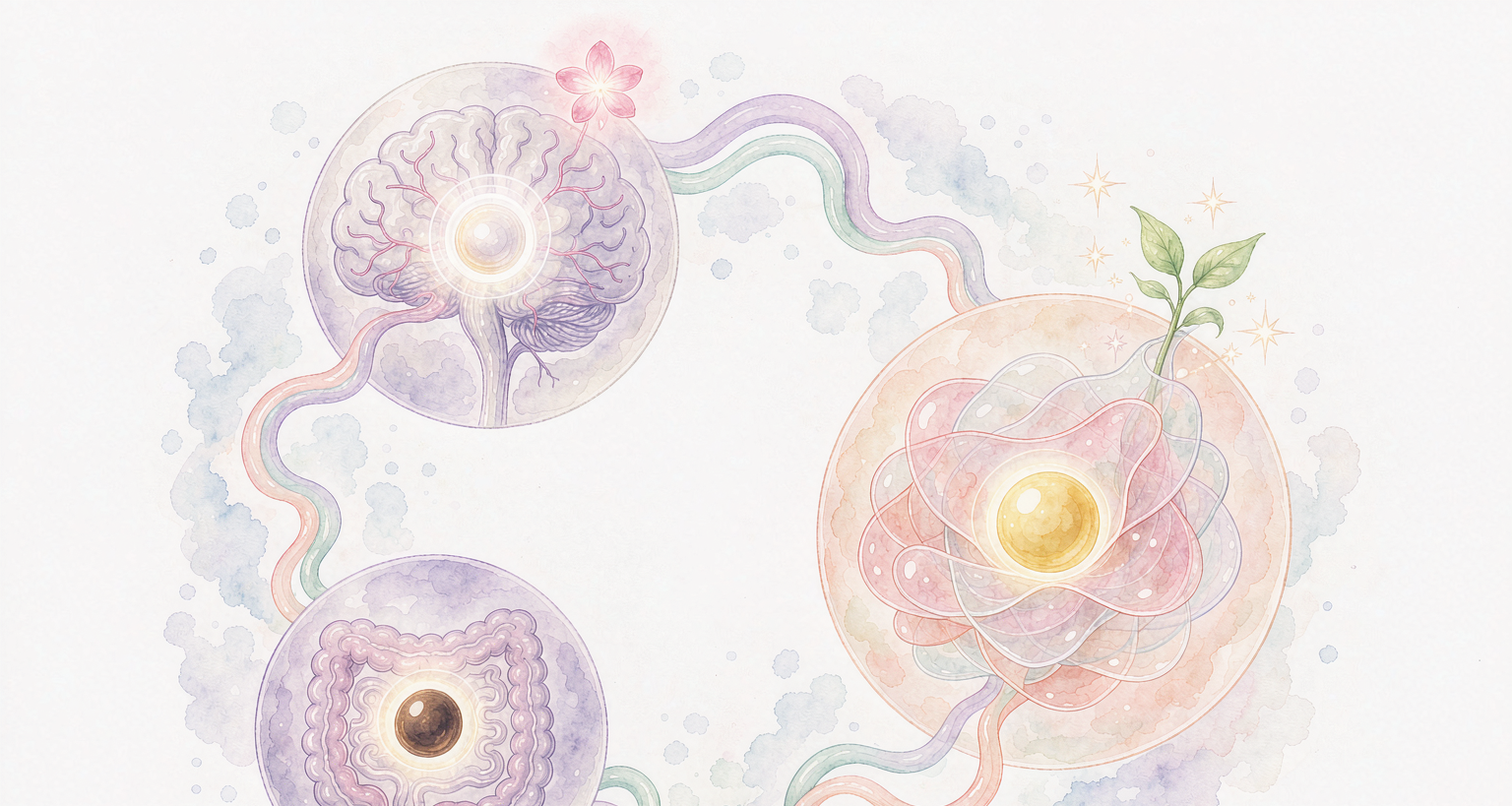
The gut-brain-skin axis describes how the brain, gut, and skin talk to each other through immune signals, hormones, and the nervous system. The gut houses trillions of microbes that help regulate inflammation, produce calming neurotransmitters, and maintain the barrier that keeps unwanted particles out of the bloodstream. The brain sets the tone through stress hormones. The skin, rich in its own immune cells and microbes, responds to both. When the system is balanced, skin stays calm. When it is not, the signals turn inflammatory.
Stress: the cortisol cascade
When you are stressed, the body releases cortisol. In the short term that is useful. Chronically, it is a problem for skin. Elevated cortisol increases sebum production, slows the skin’s ability to repair itself, and alters the gut environment. It can increase intestinal permeability, letting bacterial fragments into circulation where they trigger a body-wide inflammatory response. Up to about three quarters of people with acne point to stress as a trigger, and clinical studies link higher stress levels directly to greater acne severity. Stress also nudges behavior: worse sleep, more sugar, skipped meals, and inconsistent routines, all of which feed the same inflammatory loop.
Sleep: the repair window you keep skipping
Sleep is when the body does its maintenance. Skin cell turnover, hormone regulation, and immune balancing mostly happen while you rest. Cut that window short and the skin becomes more vulnerable: more oil, slower healing, weaker immune response, and a measurably higher inflammatory load. The relationship is bidirectional. Poor sleep worsens skin, and troubled skin worsens sleep, which is why the cycle is so hard to break without addressing both ends. Roughly three in four people with acne report that sleep quality affects their breakouts.
How the microbiome sits in the middle
The microbiome is the hinge of the whole axis. Stress-driven changes in gut bacteria raise intestinal permeability and inflammatory signaling. That inflammation reaches the skin. Conversely, a diverse, well-fed microbiome helps keep the immune system regulated and the barrier intact. This is why two people can eat the same diet and live under the same stress, yet one breaks out and the other does not: their microbial resilience differs.
Psychobiotics: calming the axis from the gut
A useful concept here is the psychobiotic, a probiotic strain that influences the gut-brain connection. Certain Lactobacillus and Bifidobacterium strains have been shown to reduce stress reactivity and support a steadier mood through vagus-nerve and neurotransmitter pathways. Because the gut and skin are linked, calming the gut-brain arm of the axis often shows up as calmer skin. A daily multi-strain probiotic, paired with the prebiotic fiber that feeds it, is the practical way to support this. A formula built around the gut-skin axis, such as PrimeBiome, fits this role naturally.
A calmer-skin day, built around the axis
You do not need a new personality, just a few small levers that protect the brain-gut-skin line.
| Lever | Why it helps the axis |
|---|---|
| Consistent sleep schedule | Protects the repair window and steadies cortisol and insulin. |
| Daily fermented foods | Feeds microbial diversity that regulates inflammation. |
| Fiber from many plants | Fuels butyrate and other compounds that strengthen the gut barrier. |
| Brief stress outlets | Walking, breathing, or quiet time lowers cortisol and protects gut permeability. |
Bottom line
Your skin is not separate from your stress or your sleep. It is the visible end of the gut-brain-skin axis, and when you protect that line, your complexion responds. Prioritize rest, soften the stress response, and feed a resilient microbiome with fermented foods and a targeted probiotic. For more on the underlying science, browse our Gut Health and Skin sections, or start with a gut-skin formula like PrimeBiome that works from the inside out.