Some skin complaints are loud: a breakout, a rash, a flare of redness. Others are quieter but just as telling. Dullness is one of them. The kind of skin that looks tired no matter how much sleep you got, that lacks the faint glow people associate with health, that seems to sit a shade greyer than it should. We tend to attack dullness from the outside with scrubs and serums, yet the cause is often sitting lower down, in the digestive tract. When waste moves slowly and the belly feels bloated, the complexion frequently pays the price. This is the constipation, bloating, and dull-skin triangle, and it is more connected than it looks.
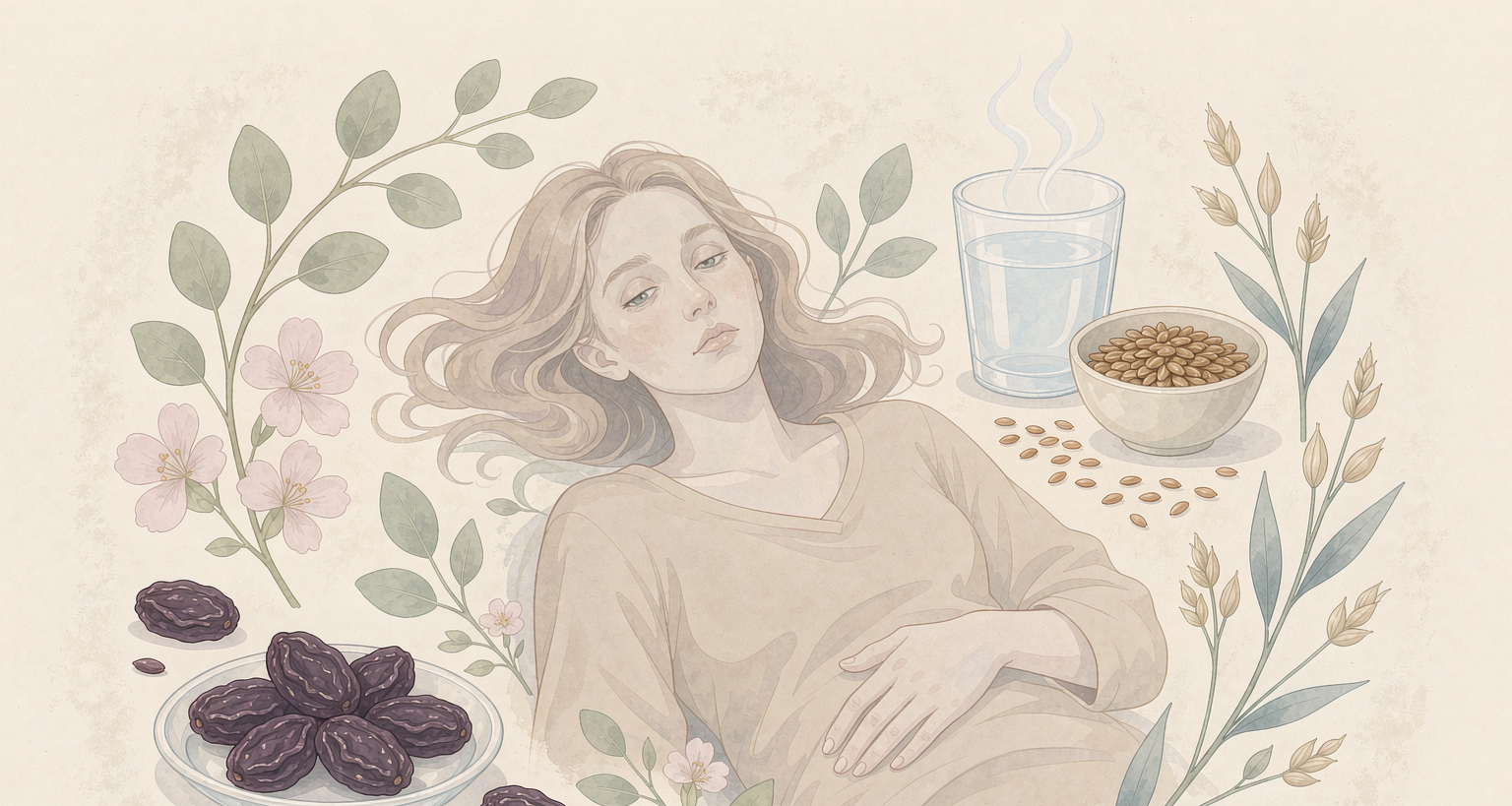
Why slow transit changes your skin
Digestion is, among other things, the body’s waste-removal system. Food comes in, nutrients are absorbed, and what remains is meant to leave on a regular schedule. When that schedule slips and stool lingers in the colon, two things tend to happen. First, water is pulled back out of the waste, making it harder and slower still. Second, the gut environment shifts, favoring bacteria that produce more gas and more fermentation byproducts, which is where bloating comes from. The longer the contents sit, the more the internal chemistry leans toward stagnation, and the skin is sensitive to that shift.
The toxin-and-inflammation shortcut
A sluggish colon does not just hold waste; it changes the microbial balance of the gut. A less diverse, more fermentative environment can weaken the intestinal barrier and allow bacterial fragments to enter circulation, where the immune system reads them as a low-grade threat. The response is inflammation, and inflammation is the enemy of a bright complexion. It dulls tone, slows the turnover of fresh skin cells, and contributes to the sallow, flat look that no highlighter can fully fake. In this sense, dull skin is sometimes the visible end of a slow gut.
Bloating, pressure, and the look of puffiness
Bloating adds its own visual layer. A distended abdomen creates internal pressure and discomfort that many people describe as making them feel inflamed all over. While bloating itself is not stored in the face, the same dietary and microbial patterns that cause it, low fiber, low fermented-food intake, and high processed-food consumption, are the same patterns linked to poorer skin quality. The bloating and the dullness are often two symptoms of one unbalanced gut, not two separate problems.
Signs your dullness is digestive, not topical
It helps to know which kind of dullness you are dealing with. Topical dullness usually improves with exfoliation and hydration and returns quickly when you slack off. Digestive dullness tends to be more stubborn and is paired with other gut clues: irregular bowel movements, a heavy or bloated feeling after meals, and a complexion that brightens only after a few days of cleaner eating. If your skin looks tired in exactly the weeks your digestion is off, the link is worth taking seriously rather than reaching for another scrub.
What the high-fiber research suggests
Fiber is the quiet hero of both digestion and skin. When gut bacteria ferment fiber, they produce short-chain fatty acids such as butyrate, which strengthen the gut lining and lower systemic inflammation. People who eat more fiber and a wider variety of plants consistently show better gut diversity, and better gut diversity tracks with calmer, more resilient skin. The mechanism is not mysterious: more fiber means smoother transit, less stagnation, a stronger barrier, and less of the inflammatory signaling that dims the complexion.
Moving things along, from the inside out
- Build fiber gradually. Aim for a wide range of plants: oats, beans, lentils, berries, leafy greens, flax, and chia. Increase slowly to avoid extra gas.
- Hydrate with intention. Water helps soften waste and supports regular movement through the colon.
- Add fermented foods. Yogurt, kefir, sauerkraut, and kimchi reintroduce beneficial cultures that improve microbial balance.
- Move your body. Walking after meals is one of the simplest, most underrated ways to stimulate digestion.
- Support the microbiome. A targeted multi-strain probiotic can help rebalance the gut so transit and tone both improve. A gut-skin formula such as PrimeBiome pairs strains with prebiotic support for exactly this purpose.
A practical weekly rhythm
| Day focus | Action |
|---|---|
| Morning | A glass of water and a fiber-rich breakfast with oats or fruit to start transit. |
| Midday | A walk after lunch and a serving of fermented food to feed beneficial bacteria. |
| Evening | A plate built around plants and legumes, plus a probiotic if part of your routine. |
| Weekly | Notice bloating and skin tone. Less bloating usually means a brighter complexion within days. |
Hydration and the colon you keep forgetting
Fiber only works if there is enough water moving through the system. Without adequate fluids, added fiber can actually make things feel heavier rather than lighter, because the bulk has nothing to soften it. A simple, often overlooked fix is to front-load water earlier in the day rather than drinking it all at once in the evening. Pairing fluids with fiber-rich meals gives the colon the moisture it needs to keep waste moving, which is the single most reliable way to stop the stagnation that dims the skin.
When dullness is a signal, not a surface issue
It is worth drawing a line between cosmetic dullness and digestive dullness. Cosmetic dullness usually responds to exfoliation and a good moisturizer and bounces back within a day or two. Digestive dullness is slower to shift and tends to travel with the rest of your gut symptoms, improving only after a few days of better food and regular movement. If your skin brightens every time your digestion does, that pattern is information. It tells you the glow you are chasing lives lower down than your bathroom shelf, and that the most effective product you own might be a fork and a walk rather than a serum.
Bottom line
Dull, tired skin is not always a skincare problem. When digestion slows and the belly bloats, the complexion often dims in step, because a stagnant gut means more inflammation and less of the microbial balance that keeps skin bright. Feed fiber, hydrate, move, and support your microbiome, and the glow tends to return from the inside. For more on the science, browse our Gut Health and Skin sections, or explore a gut-skin formula like PrimeBiome that works from within.